Glass offers superior barrier protection and infinite recyclability but adds weight and shatter risk. PET provides lightweight flexibility and lower transport costs but faces higher recycling complexity. The right choice depends on shelf life, logistics, and end-of-life infrastructure.
- Glass provides stronger oxygen and light barriers, making it ideal for products with long shelf lives.
- PET bottles are lighter, which reduces transport energy and allows more volume per pallet.
- Refill systems change the sustainability calculation significantly for both materials.
- Regional recycling infrastructure determines the practical end-of-life value of each material.
- Weight and shatter risk must be balanced against barrier performance and consumer perception.
Structural Performance and Barrier Properties
Glass and PET serve different engineering functions in beverage packaging. Glass is an inorganic material that creates a near-perfect barrier against oxygen, carbon dioxide, and light. This property is the main reason glass is selected for premium spirits, carbonated soft drinks, and long-term storage products. The glass wall does not allow volatile compounds to escape. It also blocks ultraviolet light, which can degrade sensitive ingredients.
PET, or polyethylene terephthalate, is a thermoplastic polymer. It offers a good barrier to oxygen and carbon dioxide, but not at the same level as glass. For most carbonated beverages, PET is sufficient if the bottle is designed correctly and the product is consumed within a reasonable timeframe. However, for products with high oxidation sensitivity or multi-year shelf lives, PET may require additional barrier coatings or laminates. These coatings complicate recycling and increase production cost.
The structural strength of the two materials differs. Glass is hard but brittle. A drop on a concrete floor will likely shatter the bottle. PET is flexible and impact resistant. A dropped PET bottle will usually dent or deform rather than break. This difference matters in warehouse handling, retail display, and consumer use. A PET bottle can survive a rough drop on a supermarket shelf. A glass bottle cannot.
Weight, Logistics, and Production Costs
Weight is the primary driver of transportation cost. A standard 330 milliliter glass bottle typically weighs significantly more than a 330 milliliter PET bottle. The exact weight depends on the design, but the difference is large enough to affect fuel consumption and pallet load capacity. A truck carrying glass bottles moves less volume than the same truck carrying PET bottles. This increases the cost per unit delivered.
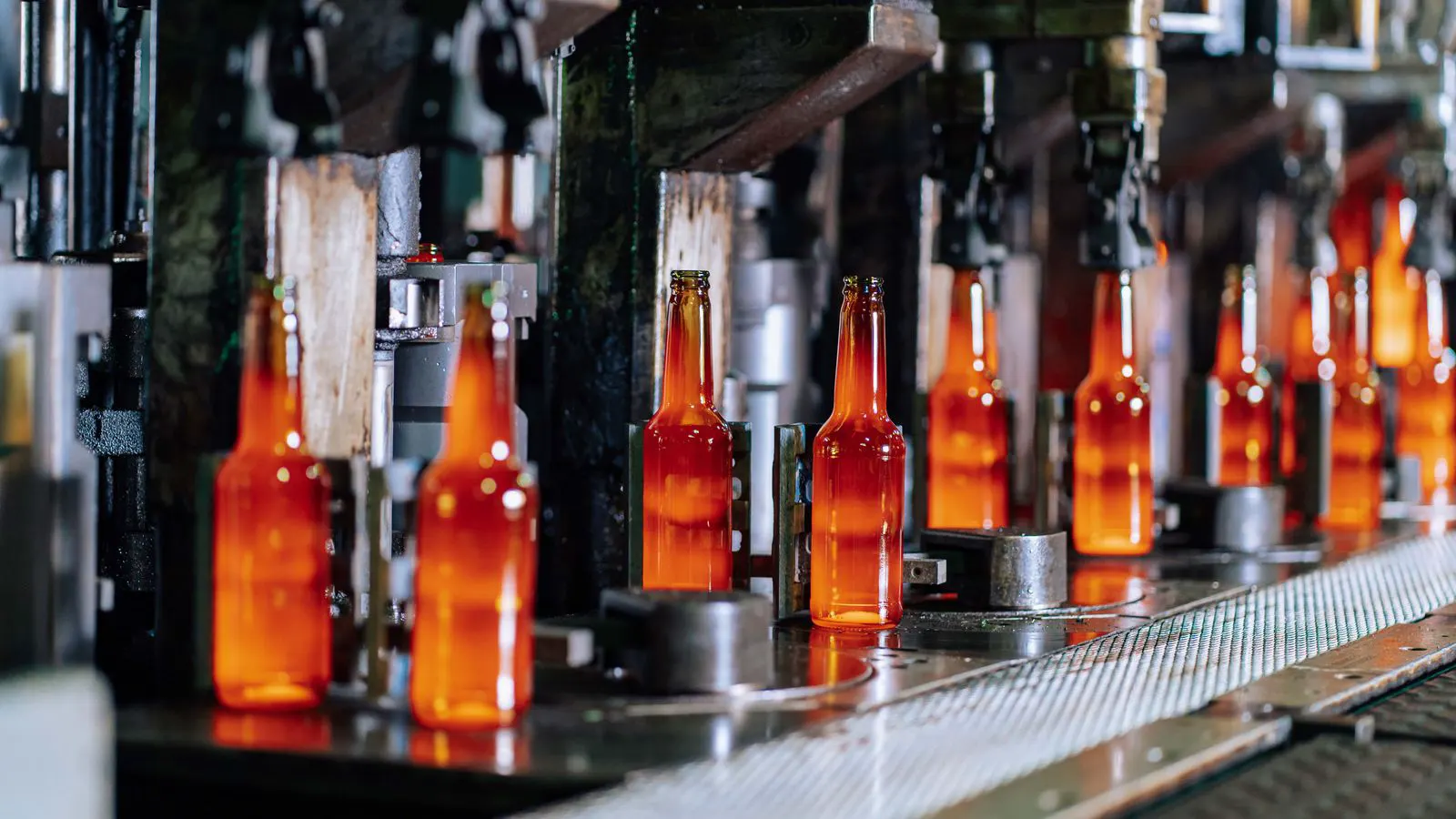
Production costs also differ. Glass melting requires extreme heat and energy. The furnaces operate at high temperatures for long periods. PET injection molding is faster and uses less energy per unit. PET bottles can be produced at high speeds in automated lines. Glass bottles require more complex forming processes and are often made from recycled cullet or raw sand, which affects the consistency of the batch.
The cost of the bottle itself is only one part of the equation. The cost of filling, capping, and palletizing must be considered. Glass bottles are heavier, which increases the stress on filling equipment. PET bottles are lighter and easier to handle. This can reduce labor costs in manual packing operations. However, glass is easier to clean and reuse in a returnable system. PET is generally used for single-use applications because the material degrades with repeated filling and washing.
Sustainability and End-of-Life Management
The sustainability profile of glass and PET depends heavily on the local infrastructure. Glass is chemically stable and can be recycled infinitely without loss of quality. When a glass bottle is crushed and melted, it produces the same material as the original bottle. The recycled glass, known as cullet, can be used to make new bottles. This closed loop is a strong argument for glass in markets with established recycling programs.
PET recycling is more complex. PET is mechanically recyclable, meaning it can be ground into flakes and melted to make new bottles. However, the process introduces impurities and degrades the polymer chains. The resulting recycled PET, or rPET, has a lower quality than virgin PET. It may be suitable for fiber applications or lower-grade containers, but it is not always ideal for food-grade beverage bottles. Some regions have strict regulations that limit the use of rPET for direct food contact.
Biodegradability is another factor. Glass is inert and does not biodegrade, but it is stable in the environment. PET is a plastic that can break down into smaller fragments over decades. Microplastics are a growing concern in environmental policy. Many consumers and regulators are shifting away from single-use plastics. This shift favors glass, especially when paired with a returnable or reusable system.
Consumer Perception and Product Positioning
The material choice influences how consumers perceive the product. Glass is often associated with premium quality, tradition, and authenticity. A wine in a glass bottle feels more substantial than the same wine in a PET bottle. The weight of the glass conveys a sense of value. For high-margin products, the added cost of glass is often accepted by consumers who perceive the material as part of the experience.
PET is associated with convenience and practicality. It is lightweight, unbreakable, and easy to carry. For everyday beverages, the convenience of a light bottle that will not break in a handbag or backpack is a significant advantage. The transparency of PET allows consumers to see the product inside, which builds trust. The material also allows for a wide variety of shapes and colors, enabling strong brand differentiation on the shelf.
The choice of material also affects the perceived environmental responsibility of the brand. Consumers are increasingly aware of plastic pollution. A brand that uses glass may signal a commitment to sustainability. A brand that uses PET may face criticism if it uses virgin plastic instead of recycled content. Some brands use PET with a high percentage of recycled content to mitigate this issue. However, the perception of plastic remains sensitive.
Refill and Reuse Systems
Refill systems change the economics and sustainability of both materials. Glass is the traditional material for refillable bottles. The bottle is returned, washed, inspected, and refilled. This system reduces the need for new bottles and lowers the environmental impact. The glass bottle becomes a durable asset that lasts for many cycles.
PET is less suitable for refill systems because the material degrades with repeated use. The polymer chains weaken after multiple washing and filling cycles. This limits the useful life of the bottle. Some refill programs use PET, but they are less common than glass refill systems. The material properties of PET make it difficult to maintain the same level of barrier performance over many cycles.
The availability of a return infrastructure is a major factor. A refill system requires a network for collecting, washing, and redistributing bottles. This infrastructure is expensive to build and operate. It works best in dense urban areas with short distribution loops. In rural or low-density areas, the logistics of collecting used bottles are not economical. In these cases, single-use systems are more practical, regardless of the material.
Regulatory and Compliance Considerations
Regulations affect the choice of material. Food safety regulations require that the packaging material does not leach harmful substances into the beverage. Both glass and PET meet these standards when used correctly. However, the testing requirements differ. PET bottles must be tested for migration of plasticizers and other additives. Glass is inert and requires less extensive migration testing.
Environmental regulations are also changing. Some regions are implementing deposit schemes for beverage containers. These schemes require consumers to return used bottles or cans in exchange for a small refund. The material choice affects the deposit amount and the logistics of the return system. Glass bottles often have higher deposits because of their value and weight. PET bottles may have lower deposits.
There are also regulations related to recycled content. Some jurisdictions require a certain percentage of recycled material in new packaging. This requirement can favor PET if rPET supply is available. It can also favor glass if the recycling rate is high. The specific rules vary by region, so manufacturers must check local laws. Compliance with these regulations is a practical constraint on material selection.
Practical Selection Criteria
| Option | Best for | Limitations |
|---|---|---|
| Glass | Premium products, long shelf life, refill systems | Heavy, brittle, higher transport cost |
| PET | Everyday beverages, lightweight logistics, single use | Lower barrier, recycling complexity, degradation |
| Refillable Glass | Urban areas with return infrastructure | High upfront cost, limited to short loops |
| Recycled PET | Markets with strict plastic regulations | Quality variability, lower barrier than virgin |
The decision between glass and PET should be based on a clear set of priorities. If the product has a long shelf life and requires a high barrier, glass is the safer choice. If the product is consumed quickly and needs to be transported over long distances, PET is more efficient. If the brand wants to position itself as sustainable and has access to a return system, glass is a strong option. If the brand wants to minimize plastic use but lacks a return system, recycled PET may be a compromise.
Final Thoughts
There is no single winner between glass and PET. The material must fit the product, the market, and the logistics network. Glass offers durability and barrier performance. PET offers lightness and handling ease. The best choice is the one that aligns with the operational and commercial goals of the brand. Engineers and buyers should evaluate each factor against their specific context rather than relying on a general preference for one material over the other.
Frequently asked questions
Is glass more sustainable than PET?
Glass is infinitely recyclable without loss of quality, which makes it highly sustainable in closed loops. PET is mechanically recyclable but the quality degrades over cycles. The actual sustainability depends on the local recycling infrastructure and whether a refill system is in place.
Can PET bottles replace glass in all beverage applications?
No. PET is suitable for most carbonated drinks and short-shelf-life products. Glass is preferred for products with high oxidation sensitivity, long shelf lives, or premium positioning. The barrier properties of PET are lower than glass, which limits its application in some segments.
What is the main cost difference between glass and PET?
The main cost difference is in weight and transport. Glass is heavier, which increases fuel costs and reduces pallet capacity. PET is lighter and cheaper to transport. Production costs also differ, with PET generally having lower energy requirements per unit.
How does the recycling rate affect the choice of material?
A high glass recycling rate makes glass a strong sustainability option. A low PET recycling rate reduces the environmental benefit of PET. Manufacturers should assess the local collection and processing rates to make an informed decision.
Are there safety concerns with glass bottles?
Yes. Glass can shatter if dropped or subjected to thermal shock. This creates a safety risk for consumers and workers. PET is impact resistant and does not shatter. This is a significant advantage for PET in high-handling environments.